How I Actually Build a Word Search Book
People sometimes picture a word search book getting made in a few clicks. I wish it were that fast. The truth is closer to a slow, stubborn process where I keep pushing until a book feels like something I’d want to sit down and solve myself.
Here’s what that looks like, start to finish.
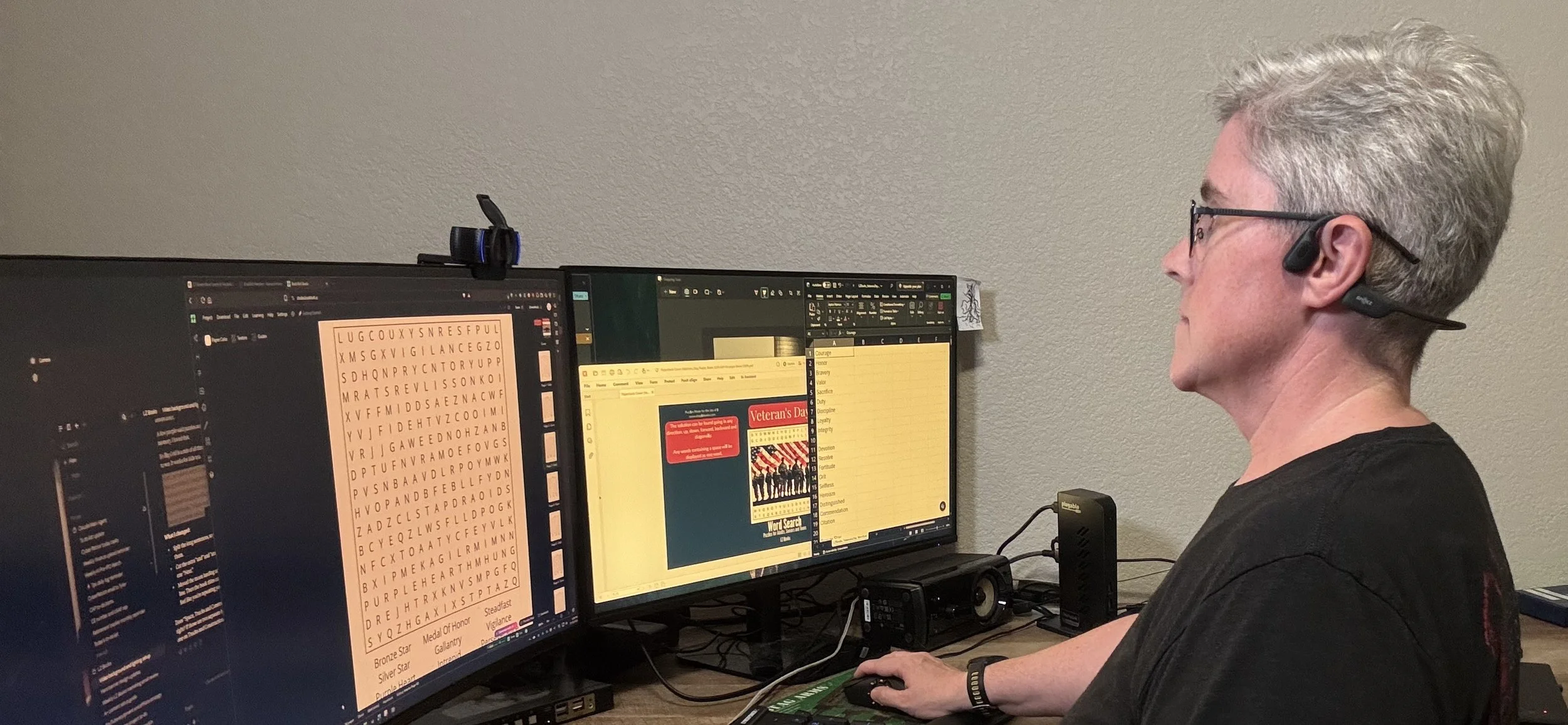
Lauri at her computer building a word search puzzle and book cover
Step One: Choosing the Subject
Before I pick a single word, I have to decide what the book is about. I use a tool to help me research the idea. I go back and forth on it, checking whether a topic is already too crowded or if there’s room for something fresh. It’s a real conversation, not a one-and-done search.
But I don’t let research make every decision. Sometimes I just want to make a puzzle book about something, crowded or not, because it sounds fun to me. Those “just because” books tend to be some of my favorites.
Step Two: Picking the Words
Once I know the topic, I build the word list: 495 words per book, grouped into puzzles of nine. I use a tool to help me brainstorm that first big batch, because staring at a blank page trying to think of 495 words about, say, gardening, is its own kind of torture. That’s where the tool’s job ends and mine begins.
I read through every single word myself. Some get cut because they’re too obscure, too awkward in a grid, or just don’t feel right for the book. Others get added because I know my readers would expect them. It’s not unusual for a word list to go through three or four drafts before I’m happy with it. I’m picky about this part, because a word search is only as good as the words inside it.
Sometimes a word gets cut for the feel of the book. When I built Myths After Midnight, a few words were just too gory. I wanted eerie, not gross, so out they went.
I’ve also added a rule since my first few books: every word has to fit a letter limit. Long words force the whole puzzle into a smaller font, and I want the print big and easy to read. Keeping words to 16 letters or fewer lets me set the puzzles in 16-point type, which counts as large print.
Step Three: Building the Puzzle
The puzzle grids get built with a puzzle-making tool called Book Bolt. Handing it a word list doesn’t mean I walk away, though. I go through every puzzle to make sure it lays out cleanly and looks nice on the page.
In several of my books, I’ve also added a small title at the top of each puzzle, usually a specific place paired with nine words about it. It’s a small touch, but it makes each page feel like its own little scene instead of just a grid of letters.
My Big Grid books work a little differently. The grids are bigger, the words are shorter and simpler, and the letters are even larger. The goal is a page a kid and a grandparent can solve side by side.
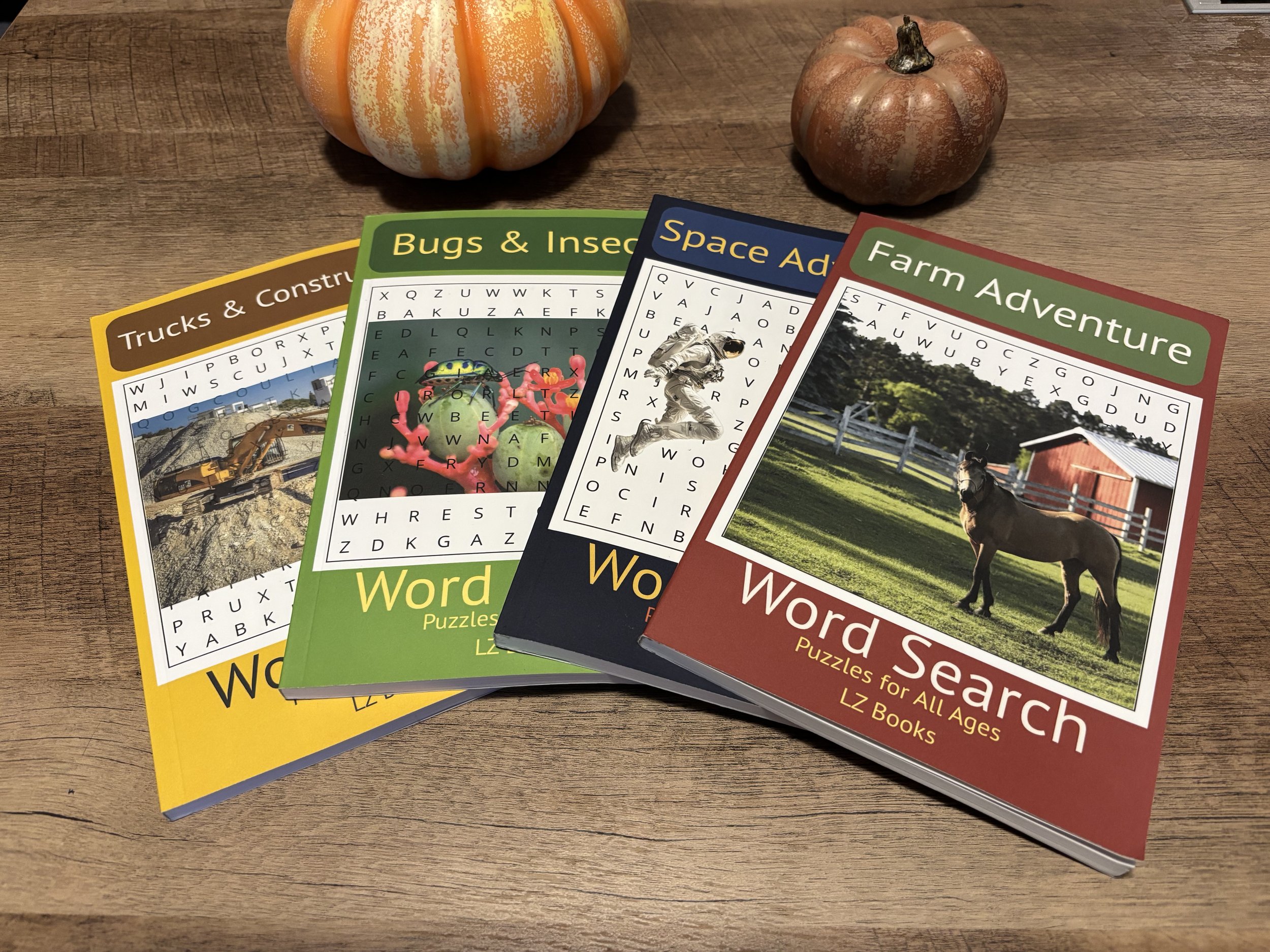
Four LZ Books Big Grid word search books on a wood table
Step Four: The Cover and the Art
This part is all mine. I design every cover myself, picking the colors, the images, and the whole feel of it, until it looks like something I’d stop and pick up in a bookstore. I’m just as particular here as I am with the words. If a cover doesn’t feel right, I keep working on it until it does.
Step Five: One Last Look
Before anything goes out into the world, I page through the whole book again, checking the puzzles and the answer key to make sure everything is clean and correct. Then KDP gives me one more look. I go through the whole book in their previewer and approve it before it can go live. That’s the last checkpoint before a book gets to be called “done.” Once it’s out, I order a printed copy for myself, just to hold the finished thing in my hands.
Why I Do It This Way
I could move faster if I skipped some of these steps. But these are books I want to be proud to put my name on, not something churned out just to have more titles on a shelf. If I wouldn’t buy it and enjoy it myself, it doesn’t get published.
That’s the whole idea behind LZ Books: made slow, made with care, and made for the joy of it.
Once a book is done, there’s a whole second round of work to get it out into the world. When I find time for all of it is a story for another post. If you want to know why I started all this in the first place, here’s the real story.